
Indian selection committee has advised Test and ODI captain Shubman Gill to prioritise red-ball and 50-over cricket until the 2027 ODI World Cup to manage his workload and ensure freshness for major ICC assignments, despite his strong IPL performance.

Despite reporting a weaker-than-expected net loss of Rs 2,536 crore for Q4FY26, largely due to a significant non-cash forex loss, analysts remain optimistic about IndiGo's long-term prospects, citing strong demand trends, a favourable pricing outlook, and strategic cost-control measures.

The Reserve Bank of India (RBI) has kept its key lending rate, the repo rate, unchanged at 5.25 per cent for the second consecutive time, citing concerns over rising energy prices, supply disruptions from the West Asia crisis, and potential inflationary pressures.

Indian companies recorded their highest profit margins in 21 quarters during Q4FY26, reaching 11.3 per cent, primarily due to significant savings from lower employee costs and reduced interest payments, which offset rising raw material prices.

Foreign Portfolio Investors (FPIs) have withdrawn nearly Rs 43,000 crore from Indian equities in the first week of June, contributing to a total outflow of Rs 2.67 lakh crore in 2026, driven by a global shift towards technology and AI-linked opportunities and persistent rupee depreciation.

India is closely monitoring Sri Lanka's decision to offer foreign investors control of an airport near the China-controlled Hambantota port, as it could present a rare opening for Indian firms seeking strategic footholds in the Indian Ocean.

Fuel prices have risen by about Rs 7.5 per litre since May 15, as global crude oil prices surged due to the ongoing conflict in West Asia and supply concerns around the Strait of Hormuz.

US President Donald Trump described Prime Minister Narendra Modi as 'a Great One', while Russia hailed him as the 'doyen of all Indian prime ministers' as world leaders congratulated him on becoming India's longest continuously serving elected representative at the top post.
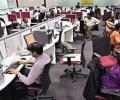
India's services sector growth reached a five-month high in April, with the HSBC India Services PMI Business Activity Index rising to 58.8, primarily driven by robust domestic demand and a shift from international to local suppliers amidst the West Asia crisis.

Listed capital market companies in India delivered strong fourth-quarter earnings growth, with a universe of 12 firms posting 30 per cent year-on-year revenue growth and 19 per cent earnings growth in Q4FY26, despite mark-to-market (MTM) losses impacting headline profitability for some.

The asymmetry in deposit and credit growth is the biggest challenge before the Indian banking industry. For every 100 deposit that a bank mobilises, it needs to keep 3 with the banking regulator in the form of cash reserve ratio on which it doesn't earn any interest. Another 18 is used for buying government bonds (statutory liquidity ratio). This means, a bank is left with 79 for giving credit. Add to this, its capital which can be used for giving loans. Most banks are facing a fund crunch. They need to find ways to attract deposits if they want to sustain credit growth, explains Tamal Bandyopadhyay.

The Indian equity market is set for an event-heavy week, with analysts pointing to the Reserve Bank of India's (RBI) interest rate decision, developments in the US-Iran situation, and crude oil prices as the primary determinants of market trends.

India's exports recorded a 13.78 per cent increase to USD 43.56 billion in April, marking the highest monthly outbound shipments in over four years, primarily driven by petroleum products. However, the trade deficit widened to a three-month high of USD 28.38 billion due to a 10 per cent rise in imports.

Rajesh Mehta, Chairman of Rajesh Exports, has distanced his firm from LIC's investment decisions, stating, "We don't even know where LIC's office is. We have no contact, no connection. This decision of buying shares through the secondary market is their own decision in a prudent commercial manner."

Apple CEO Tim Cook expresses strong optimism about the Indian market, citing its potential for growth and the company's recent successes in the region.

Indian defence stocks have seen an average year-on-year gain of 67 per cent, driven by renewed interest following 'Operation Sindoor' and a broader increase in global geopolitical tensions, with the combined market capitalisation of 18 firms increasing by approximately 2.3 trillion.
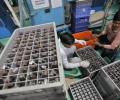
Escalating geopolitical tensions in West Asia are beginning to disrupt India's automotive supply chain, leading to rising commodity prices, logistics bottlenecks, material shortages, and pressure on consumer demand, with two-wheeler makers already raising prices.

Hyundai Motor India Ltd reported a 22.22 per cent decline in consolidated profit after tax to Rs 1,255.63 crore in the March quarter, primarily due to higher expenses, despite an increase in total revenue from operations.

The Mumbai-Ahmedabad bullet train project has achieved a significant milestone with the excavation of a mountain tunnel in Palghar, Maharashtra, marking the third such achievement in the district within the last five months. This progress underscores the rapid construction pace in a geographically challenging section of the high-speed rail corridor.

The gems and jewellery industry anticipates challenging times following the government's decision to increase gold import duty to 15 per cent, a move that exporters warn could fuel the grey market and heighten smuggling risks.

Indian IT stocks experienced a significant downturn following OpenAI's acquisition of consulting firm Tomoro, intensifying fears that global AI companies are encroaching on traditional IT service models through end-to-end consulting and implementation services.

Indian benchmark indices Sensex and Nifty climbed in early trade, driven by a significant drop in crude oil prices following reports of a potential 60-day ceasefire extension between the US and Iran, coupled with positive global market trends and buying in IT stocks.

India's eight core infrastructure sectors recorded a two-month high growth of 1.7 per cent in April, primarily boosted by strong performances in steel, cement, and electricity production, according to government data.

The Indian government's decision to ban sugar exports until September 30 has drawn sharp criticism from the sugar industry and farmer leaders, who fear long-term negative impacts despite the stated aim of controlling domestic prices and ensuring availability.

Indian benchmark indices Sensex and Nifty closed marginally lower due to profit-taking, following the Reserve Bank of India's decision to keep the repo rate unchanged while lowering its growth expectations for the current fiscal year and forecasting higher inflation.
RBI Governor Sanjay Malhotra stated that the central bank is closely monitoring whether the supply shock from the West Asia conflict will lead to a generalised price rise, potentially necessitating monetary policy action.

India's five publicly listed Real Estate Investment Trusts (REITs) collectively distributed more than Rs 2,566 crore to over 425,000 unitholders in Q4FY26, with a cumulative distribution exceeding Rs 8,900 crore for the full fiscal year.

Analysts are revising down India Inc's financial year 2026-27 (FY27) earnings growth forecasts, citing persistently high crude oil prices above $100 a barrel due to the West Asia conflict, which is expected to dent corporate financial performance in the coming quarters.

Maruti Suzuki India reported a significant 147 per cent year-on-year increase in mini-car sales (Alto and S-Presso) during April-May 2026, reaching 32,341 units, driven by eased production constraints and a surge in demand for CNG vehicles amidst rising fuel prices.

API Holdings, the parent company of online pharmacy PharmEasy, has significantly reduced its debt from 1,800 crore to 1,050 crore and refinanced it at lower interest rates under CEO Rahul Guha, shifting its focus from 'growth at any cost' to profitability and aiming for a debt-free balance sheet before a potential stock market listing.

Hybrid mutual fund schemes attracted significant inflows of Rs 1.55 lakh crore in FY26, a 29 per cent increase, as investors increasingly opted for diversified investment strategies to navigate volatile market conditions and geopolitical tensions.

Indian stock markets experienced a significant sell-off, with the Sensex tumbling over 1,300 points, driven by escalating crude oil prices due to US-Iran tensions and Prime Minister Narendra Modi's call for austerity measures, which amplified investor concerns about India's economic outlook.

Jewellery majors Titan Company and Kalyan Jewellers reported robust Q4 FY26 results, with Titan's consolidated revenue surging 81 per cent year-on-year, largely propelled by a sixfold increase in bullion and digital gold sales. Despite strong top-line growth, Titan's gross and operating profit margins faced pressure due to the higher share of lower-margin gold products and increased marketing expenditure.
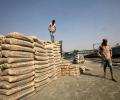
Indian cement manufacturers, despite a stable Q4FY26, are bracing for significant profitability pressures from Q1FY27 onwards due to escalating input costs, primarily driven by the West Asia conflict's impact on coal and petcoke prices.

Indian pharmaceutical companies are strategically increasing investments in the US market, focusing on specialty drugs, complex generics, respiratory products, and local manufacturing, despite a nearly 10 per cent fall in exports to the US in FY26 due to pricing pressure and competition in traditional generics.

Champagne consumption in India is expanding beyond major metropolitan areas into smaller cities like Kanpur, Guwahati, and Lucknow, driven by a desire for sophisticated lifestyle declarations and a growing appreciation for the beverage.

Tata Motors' MD and CEO, Girish Wagh, has identified rising diesel prices as the most significant threat to India's commercial vehicle (CV) industry recovery, despite the sector recently surpassing its pre-FY19 wholesale peak. Diesel costs account for 25-50% of a truck operator's total cost of ownership, making any increase a critical concern for fleet economics.

Indian shooter Esha Singh credits her mental fortitude, developed after the Paris Olympics, for her recent success, including a world-record gold at the ISSF World Cup in Munich.
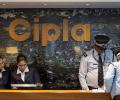
Pharmaceutical major Cipla reported a 3 per cent year-on-year decline in March quarter revenue to Rs 6,541 crore, with net profit falling 55 per cent to Rs 554.6 crore, missing consensus estimates. Despite strong growth in India and Africa, a significant decline in North American sales impacted overall performance, with the company now focusing on new product launches and regulatory filings to drive future gains.

A month after losing power in West Bengal and facing a rebellion by 58 MLAs, the Trinamool Congress (TMC) confronts an unprecedented challenge to Mamata Banerjee's absolute authority, raising questions about the party's survival and future.
